
The Shot That Could Change Everything: AAV9 Gene Therapy and the Future for Children Like Crosby
Written by Ryan Phillips, FRF CFO and FOXG1 Dad
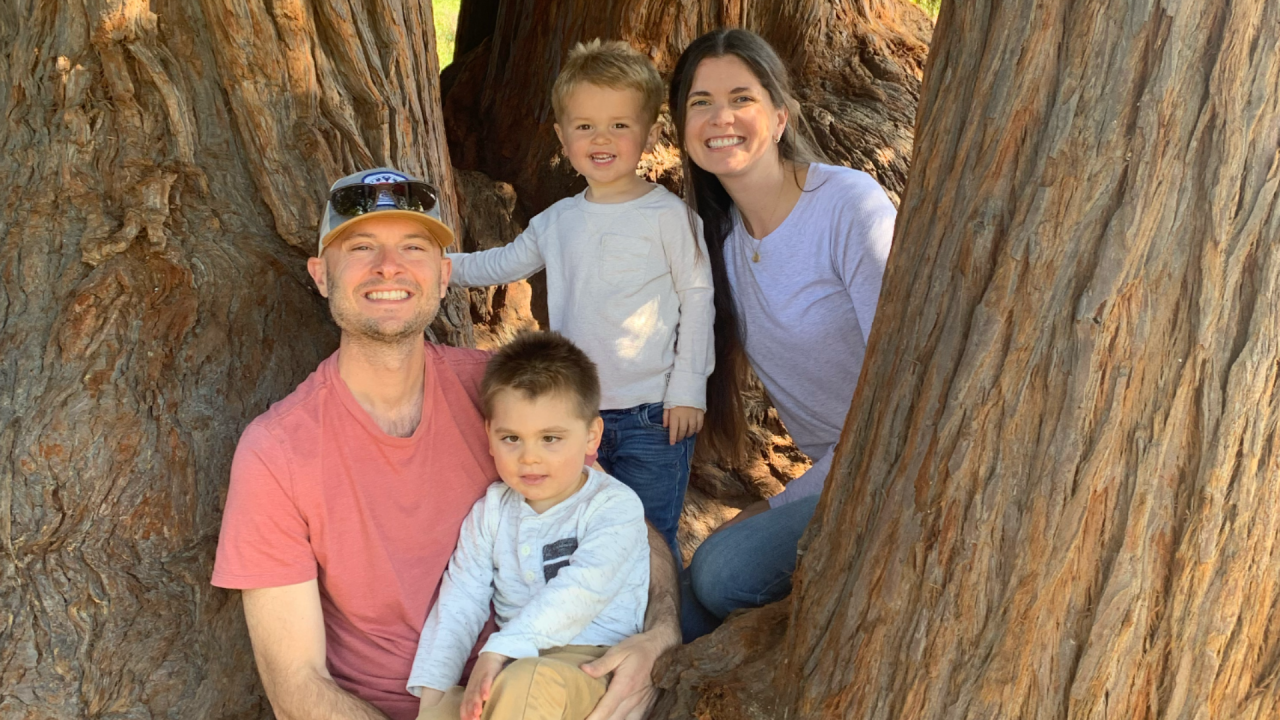
Ryan Phillips with his son Crosby and family
Five years ago, my life changed forever.
My firstborn son, Crosby, was diagnosed with FOXG1 syndrome—an ultra-rare, monogenic neurological disorder that affects brain development and leaves children unable to walk, speak, or perform basic functions without significant support. He was just six months old when we got the news. Since then, every night, every weekend, and every ounce of spare energy I’ve had has gone into fighting back against the silence and suffering that FOXG1 imposes on children like my son.
Today, I have something different to share: hope.
We’re preparing to bring a first-of-its-kind AAV9 gene replacement therapy for FOXG1 syndrome into the clinic in Q1 of next year. That’s not a hypothetical. It’s real. It’s happening. And it could change everything.
A Personal Mission, A Global Team
As the volunteer CFO of the FOXG1 Research Foundation, the team has raised nearly $11 million bring this cutting-edge technology to children like Crosby. This has been our most ambitious effort yet, building a path to gene therapy—a road that few rare disease foundations have successfully walked.
Through a partnership with the University at Buffalo’s Drs. Jae and Soo Lee—guided by a world-renowned gene therapy advisor who has helped bring AAV9 therapies to the clinic before—we’ve developed a novel AAV9-based gene replacement therapy tailored for FOXG1 syndrome.
This isn’t just theory. This is a therapeutic drug. Manufactured. Toxicology studies are underway. And we’re preparing for clinical trials.
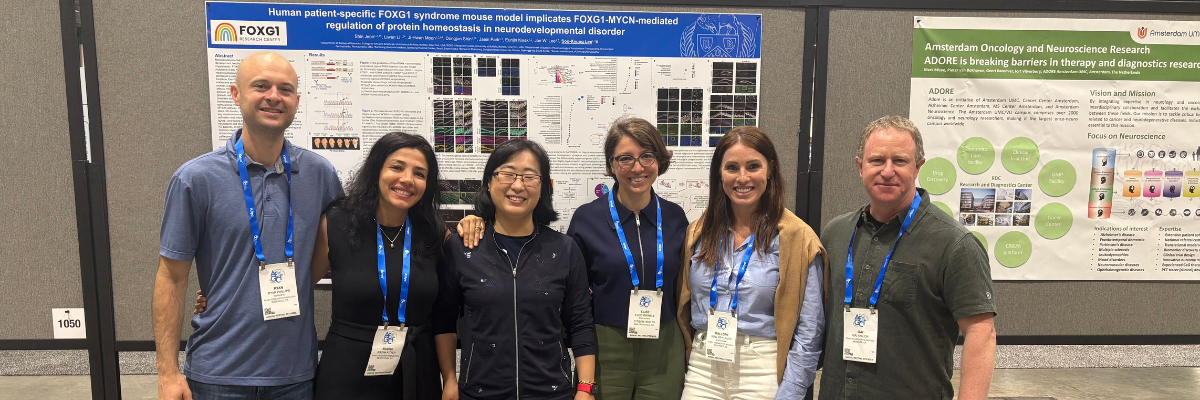
FOXG1 Research Foundation team at ASGCT poster presentations
Why AAV9 for FOXG1 Syndrome, and Why Now?
Adeno-associated virus 9 (AAV9) has proven to be a safe and effective vector for delivering genes directly into the central nervous system. Most notably, AAV9 was used to develop gene therapies like:
Zolgensma (onasemnogene abeparvovec): Approved for spinal muscular atrophy (SMA), it has allowed children who were once facing early death to sit, crawl, and even walk.
Neurogene’s gene therapy for Rett: In early clinical trials, patients demonstrated motor function improvements in a condition previously marked by steady neurological decline.
Taysha’s gene theray for Rett: 100% of participants gained or regained at least one developmental milestones.
These aren’t cures in the traditional sense. But they alter the trajectory—turning hopeless prognoses into stories of developmental gains and extended life.
We believe FOXG1 syndrome can be next.
What Success Might Look Like for FOXG1 Syndrome
With FOXG1, even modest gains can be life-changing. If gene replacement therapy helps restore even a fraction of lost FOXG1 function, children might:
Gain head control, enabling better mobility and feeding.
Improve sleep, reducing seizures and irritability.
Express joy or pain more clearly—allowing their families to connect on a deeper level.
Possibly speak, sit, or even walk with assistance.
We’ve modeled our preclinical program on the success seen in other AAV9-treated conditions and seen compelling results in animal models. This is not a far-off dream—it’s a vision backed by science, community, and commitment.
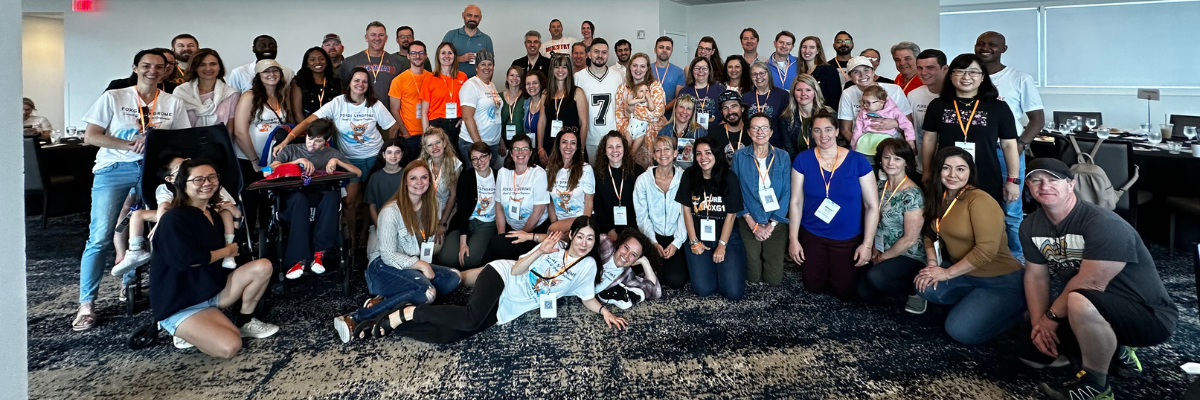
FOXG1 parents and families from all over the world gathered at the FOXG1 Research Foundation’s 2024 conference
A Call for Collective Action
We’re not a pharmaceutical company. We’re a foundation. A family. A movement. And we’re doing what we can to push this therapy across the finish line. But we can’t do it alone.
If you’re in biotech, philanthropy, venture, or advocacy—join us. Partner, fund, advise, amplify.
Because somewhere out there, another parent is hearing the word “FOXG1” for the first time. And one day soon, we want to be able to say, “There’s a treatment for that now.”
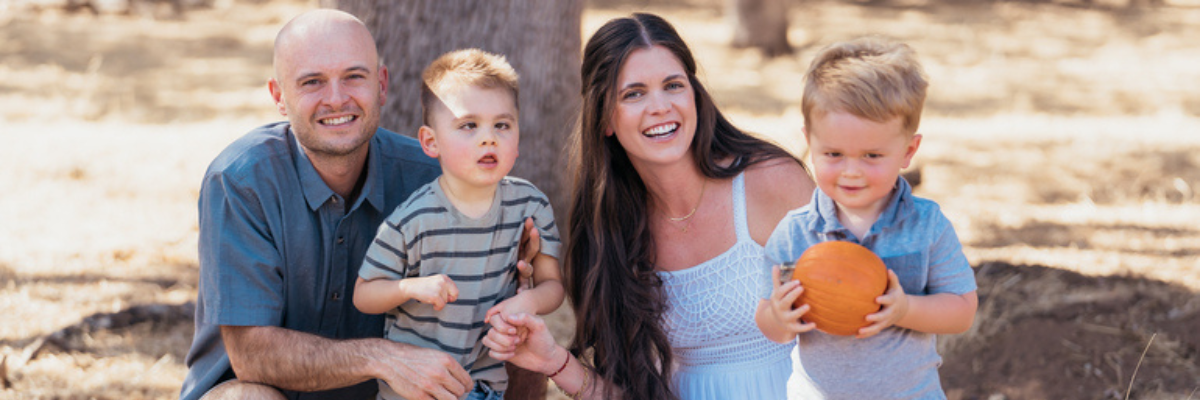
The Phillips family
From My Family to Yours
Crosby is five years old. He has an infectious laugh. He endures more than most of us ever will. And he has taught me more about resilience and love than I ever thought possible.
This therapy might change his life. Or maybe, it will come just a little too late for him—but not for the next child.
Either way, we’re going to deliver it. Because every child with FOXG1 deserves the chance that science can now give them.
Thank you for reading. Please share this if it moved you. You never know who might be the connection we need.
Links to learn more:
Support Crosby's FOXG1 Fundraising Team Here
Learn more about the FOXG1 Gene Therapy "Yes, They Can Campaign" Here
Learn more about FOXG1 Gene Therapy Program Here