

FOXG1 Syndrome ICD-10 Code
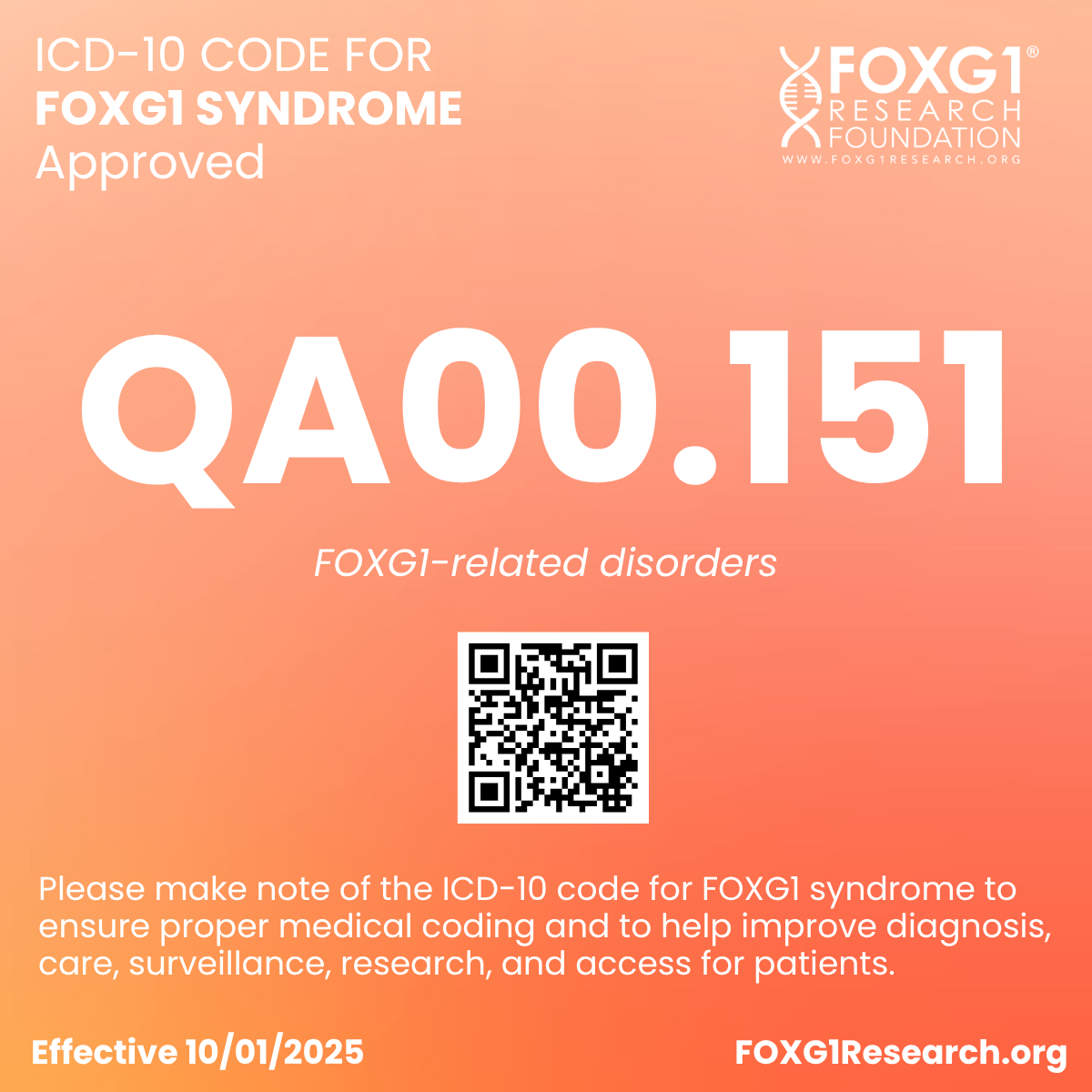
Official Diagnosis Code: QA00.151
FOXG1 syndrome has an official ICD-10-CM code: QA00.151 (effective October 1, 2025).
This unique code provides families, clinicians, and researchers with an important tool for ensuring FOXG1 syndrome is properly recognized across healthcare systems.
Why it matters
For many years, children with FOXG1 syndrome were coded under a mix of broad or unrelated categories such as epilepsy, developmental delay, or hypotonia. This made FOXG1 syndrome essentially invisible in health data, which limited access to services and made it harder to:
Justify insurance coverage for therapies, treatments, and interventions
Track health outcomes consistently
Build stronger research datasets and accelerate clinical studies
Now, with its own ICD-10 code, FOXG1 syndrome is formally recognized — giving families clearer pathways to care and giving researchers stronger data to drive progress.
For Parents & Caregivers
Share QA00.151 with your care team. Ask your child’s neurologist, pediatrician, therapists, and hospitals to add it to all medical records and insurance claims.
Keep it handy. Download the FOXG1 ICD-10 code card here (PDF link). Take a photo and save it to your favorites on your phone so it’s always ready at appointments.
Stay informed. Consistent use of the code across the community makes FOXG1 more visible in healthcare systems and research.
For Clinicians
Please use QA00.151 in the medical record for all patients with FOXG1 syndrome. Consistent coding supports accurate epidemiology, improves access to appropriate care, and strengthens the data that will drive clinical research and treatment development.
Learn More
Read more about how our community worked to secure this milestone: FOXG1 Syndrome ICD-10 Blog Post →.