

January Newsletter: Big Things in 2019
Looking Back. Moving Ahead.
Wow! 2018 was an incredible first year for the FOXG1 Research Foundation! We cannot thank our supporters, partners, and donors enough for helping to make 2018 an enormously successful year!
2018 Key accomplishments:
• Raised $1.3 Million for research
• Assembled a Scientific Advisory Board consisting of 16 of the world's leaders in
their fields.
• Funded six esteemed scientists' projects along our Path to a Cure in the USA,
UK, and Italy
• Launched the most comprehensive study into FOXG1 to-date,
with eight mouse models of all known FOXG1 categories.
• Developed a global FOXG1 Syndrome Patient Registry
• Developed an iPSC line Patient Biobank
The First FOXG1 Scientists Symposium - A Recap.
The first FOXG1 symposium was a tremendous success in bringing together scientists from around the world who are interested in research around FOXG1 to collaborate with one another to find a cure. Scientists from Japan, Australia, Italy, the UK, the US, and more, presented and held deep-diving sessions to discuss what we know and what we need to know to drive research for FOXG1 syndrome.
For Yuna: OHSU Scientist Unveils Origins Of Daughter’s Rare Condition: Study Findings Could Lead To New Treatment Options For FOXG1 Syndrome
For more than 20 years, Soo and Jae W. Lee have studied the specialized functions of transcription factors including FOX proteins, a family of 40-plus genes integral to the lifetime development and function of such organs as the brain and heart.
WFAN "Public Affairs" Discussion with FOXG1 Research Co-Founder Nicole Zeitzer Johnson
WFAN NY Sports Radio “Public Affairs” host Bob Salter talks to the co-founder of the FOXG1 Research Foundation, Nicole Johnson, about the extraordinary experience of learning her daughter was born with a rare genetic neurological disorder called FOXG1 syndrome - without being carriers - to starting a research foundation to find a cure. Plus how CBD oil has made a tremendous impact in helping control seizures.
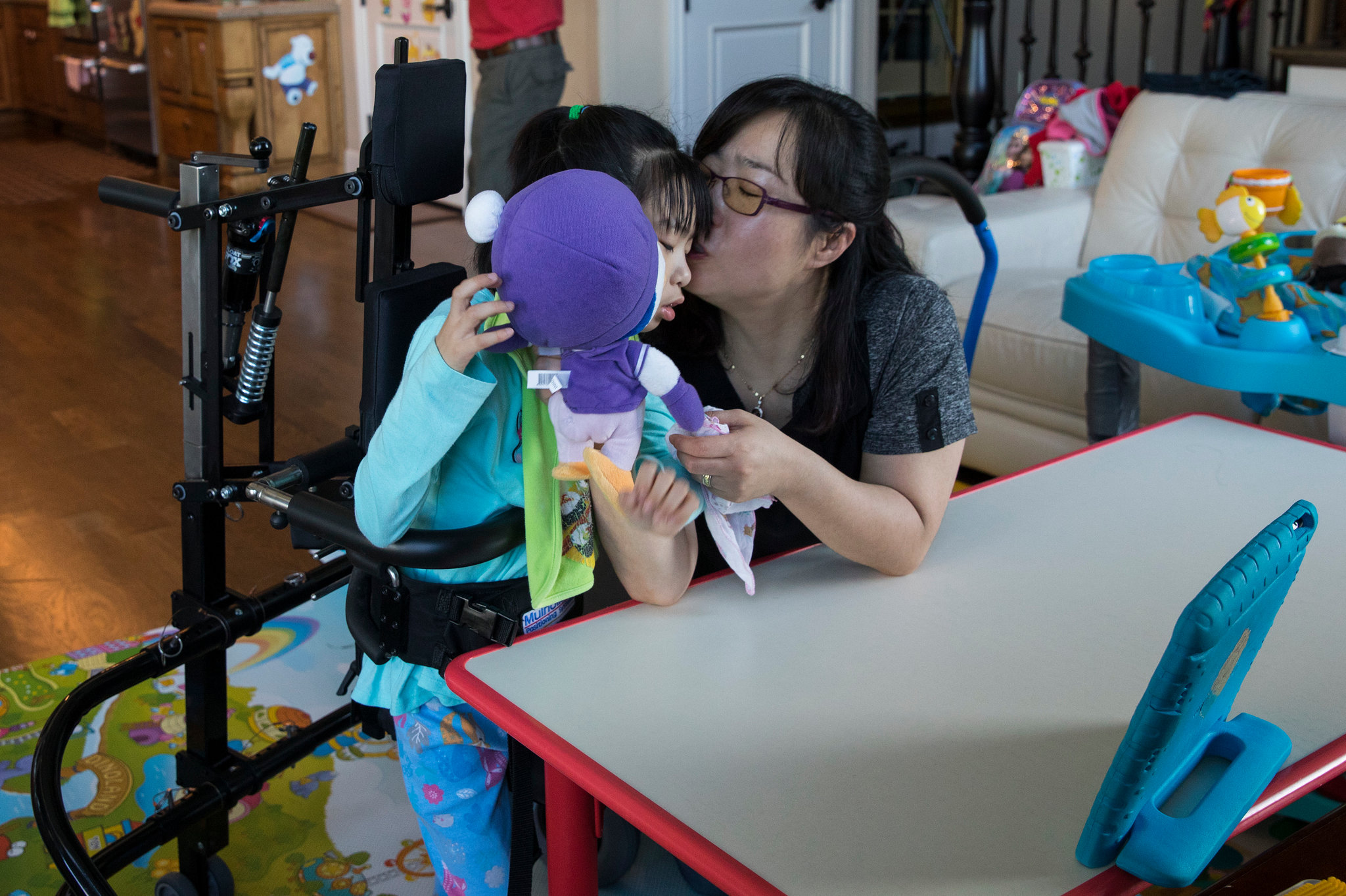
Infinitesimal Odds: A Scientist Finds Her Child’s Rare Illness Stems From the Gene She Studies - NYT Video
By the time her mother received the doctor’s email, Yuna Lee was already 2 years old, a child with a frightening medical mystery. Plagued with body-rattling seizures and inconsolable crying, she could not speak, walk or stand.
“Why is she suffering so much?” her mother, Soo-Kyung Lee, anguished. Brain scans, genetic tests and neurological exams yielded no answers. But when an email popped up suggesting that Yuna might have a mutation on a gene called FOXG1, Soo-Kyung froze.