
What a $4.9 Million Grant Really Means for the FOXG1 Community
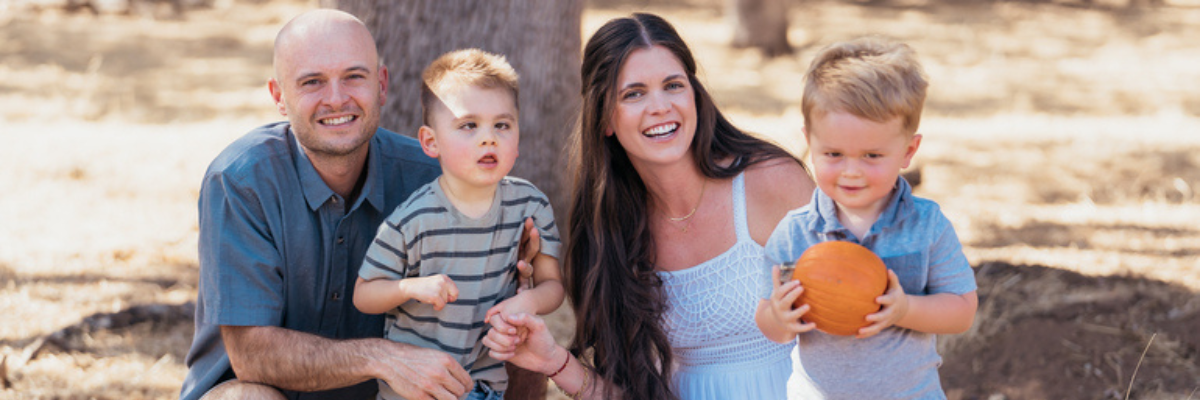
FOXG1 Research Foundation CFO and Dad to Crosby with his family.
When my son Crosby was diagnosed with FOXG1 syndrome, there was no treatment. There was no clinical trial. There was no prospect of a drug program. There wasn't even a clear roadmap for how a rare disease affecting only a few hundred children worldwide could ever attract the resources needed to develop a therapy. Like many parents receiving a devastating diagnosis, we were told to focus on physical and occupational therapies, symptom management, and supportive care. The implication was clear, there was little hope for changing the course of the disease itself.
Today, that reality feels very different.
This week, the FOXG1 Research Foundation was awarded a $4.9 million grant from the California Institute for Regenerative Medicine (CIRM) to support our Phase 1/2 gene therapy clinical trial. The funding is transformative for our organization and our ability to advance FRF-001, our AAV9 gene therapy program.
But what means even more to me is the validation behind it.
CIRM is one of the most competitive funding organizations in regenerative medicine. Applications are reviewed by independent panels of scientific, clinical, manufacturing, regulatory, and patient advocacy experts. These reviewers have no connection to our Foundation, our families, or our program.
They simply evaluate the evidence.
After reviewing our application, the panel awarded FRF-001 a score of 88 and classified the program as having "Exceptional Merit and Warrants Funding."
As I read through the review comments, I was struck by what they chose to highlight.
Yes, they described the science as strong.
Yes, they cited our "very strong preclinical data."
Yes, they recognized the promise of a targeted AAV gene therapy approach for a devastating ultra-rare disease with no approved treatments.
But what stood out most was their recognition of the community that built this program.
The reviewers praised the strength of our natural history study.
They highlighted our global patient registry.
They called our caregiver involvement "impressive."
They described our Patient Advisory Group as "exemplary."
One reviewer noted that our team had done an "exceptional job incorporating the patient voice into every step."
For those outside the rare disease world, those comments may seem routine.
For me, they are extraordinary. Because the patient voice is not a box we checked.
It is the reason this program exists. The FOXG1 community didn't inherit a drug development program. Families built it. Parents helped create the registry. Parents participated in the natural history study. Parents traveled to scientific meetings. Parents raised the funds that enabled the research. Parents shared their experiences so researchers could understand which outcomes would truly matter in their children's lives.
Many of those parents were told, just as we were, that nothing could be done. They refused to accept that answer. The result is what we see today: an independent panel of experts reviewing every aspect of our program and concluding that it is worthy of significant investment.
That doesn't mean the work is finished.
Drug development is hard. Clinical trials are hard. There are no guarantees.
The reviewers appropriately challenged us on important questions that every first-in-human gene therapy program must answer.
But their overall conclusion was unmistakable.
The unmet need is enormous.
The science is compelling.
The clinical plan is credible.
The team is strong.
And the community behind it is exceptional.
For Crosby and every individual living with FOXG1 syndrome, this award represents far more than funding.
It is proof that what began as a group of determined families has become something much larger.
A real clinical-stage program.
A real opportunity.
A real reason for hope.
To every family, donor, researcher, clinician, volunteer, and supporter who helped make this moment possible: thank you.
This milestone belongs to all of us.
— Ryan Phillips